What's Happening!
-
OUR NEXT OPEN APPLICATION COMMISSION IS NOW LIVE!
Every year Clubbed Thumb invites playwrights to propose plays inspired by a particular prompt. The application is free and open to all; the anonymous proposals are read by a panel of theater artists. The winning proposal(s) receive (or split) a $15,000 award and development support. (Read more about our new approach to play submissions HERE.)
This year, thanks to the gift of an anonymous sponsor, we are pleased to announce our next submission opportunity: Anthropology of the Workplace – a Margaret Mead Commission.
-
THE FAMILY DOG WILL RETURN IN 2027!
Summerworks 2026’s sold-out, hit production of THE FAMILY DOG by Bailey Williams, directed by Tara Ahmadinejad and starring the original cast will return for FOUR WEEKS ONLY, February 9 – March 6, 2027 at New York Theatre Workshop. Tickets will go on sale in a few weeks – sign up for our EBLAST to get updates, early access and special ticket deals!
-
THANK YOU FOR MAKING OUR GALA A GREAT SUCCESS
Thanks to everyone who joined us to honor Josh Silverman, and to everyone who contributed to make it a truly special night.
It’s not too late to contribute to the Josh Silverman Fund! DONATE HERE
-
MEET OUR 26/27 GROUP COHORTS!
A very warm welcome to the incoming writers and directors taking part in Clubbed Thumb’s Early-Career Writers’ Group and New Play Fellowship!
Directors Cricket Brown, Marissa Joyce Stamps and Jillian Jetton will work on plays by Daniel Holzman, Aaron Ricciardi and Nikhil Mahapatra respectively – stay tuned for a Winterworks announcement.
And we’re looking forward to getting to know Agyeiwaa Asante, Ida Cutler, Carlin Feck, Fiona Gorry-Hines, Salwa Meghjee, Derick Edgren Otero, Jacob K. Robinson and Amy B. Tiong in this year’s writers’ group!
-
THANK YOU FOR COMING TO SUMMERWORKS 2026
Whether it was your first Summerworks or your 29th, we are so pleased you could join us. CLICK HERE for photos, essays and press from this season.
We’ll be spending the summer incubating and planning for the fall, but we have lot of news to share, so watch this space!
-
OUR NEW ANTHOLOGY - ON SALE NOW
We’ve been eager to put out a second anthology since Funny, Strange, Provocative was published in 2007, and the last year finally provided us with the time to take on this long-awaited project. We are thrilled to announce that Unusual Stories, Unusually Told, published by Bloomsbury/Methuen, is now available!
In it you’ll find seven Clubbed Thumb plays that span 18 years of our history, as well as essays and interviews about the work, and the often atypical processes that led to their productions.
Read more about the book and get your discounted copy (and our first anthology) HERE
THE 2026 OPEN APPLICATION COMMISSION
Every year Clubbed Thumb invites playwrights to propose plays inspired by a particular prompt. The application is free and open to all; the anonymous proposals are read by a panel of theater artists. The winning proposal(s) receive (or split) a $15,000 award and development support. (Read more about our new approach to play submissions HERE.)
This year, thanks to the gift of an anonymous sponsor, Clubbed Thumb announces:
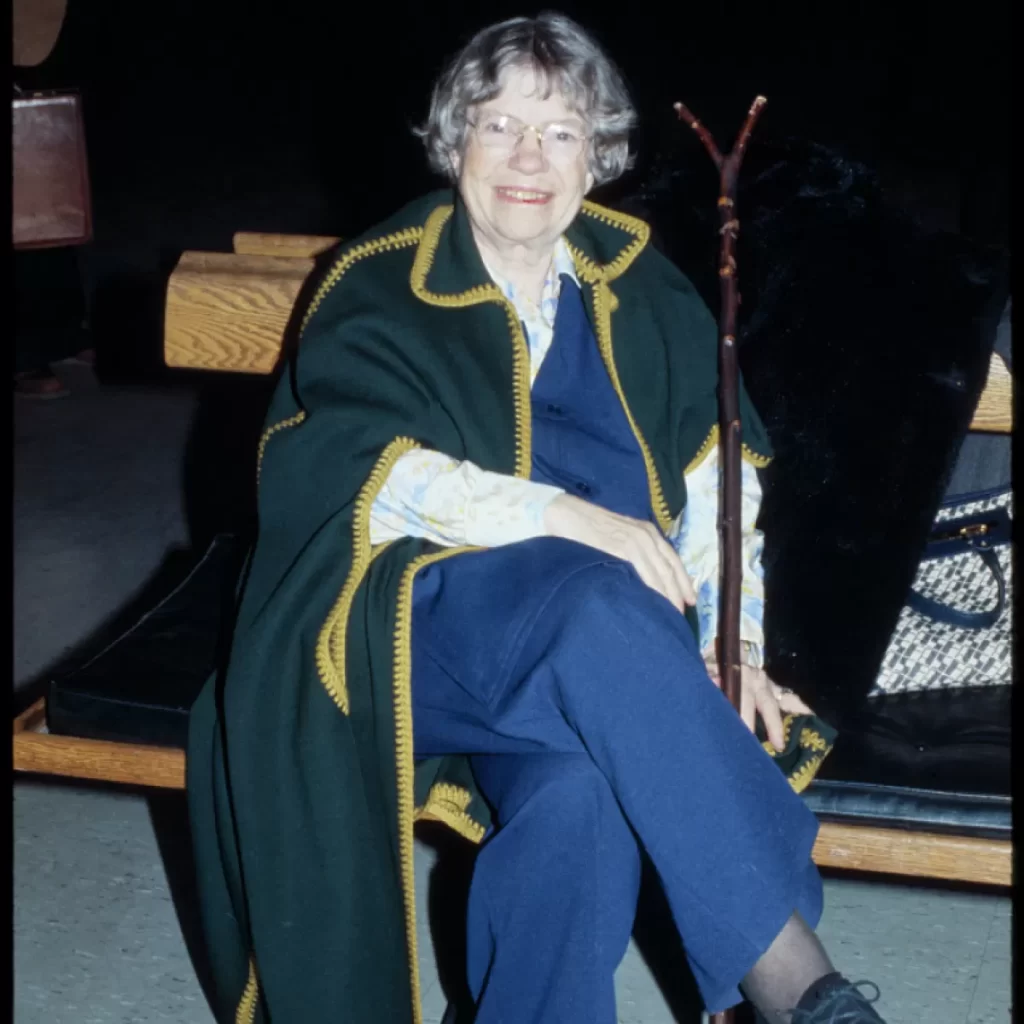
Anthropology of the Workplace – a Margaret Mead Commission
Mead was a groundbreaker: a plain-speaking, iconoclastic public intellectual, who gave a clear and charismatic articulation (of her point of view) on sexuality, gender equity, race, and labor among many, many other things. She was the ambassador for the study of cultural anthropology and was among the first to popularize the now-given notion that all humans have culture.
Mead studied how heterogenous “clusters” of people can invent new cultural forms, with unique foods, rituals, hierarchies, traditions and rules. Work is often how Americans in 2026 experience familial and community structure and so we are inviting proposals for the workplace play.
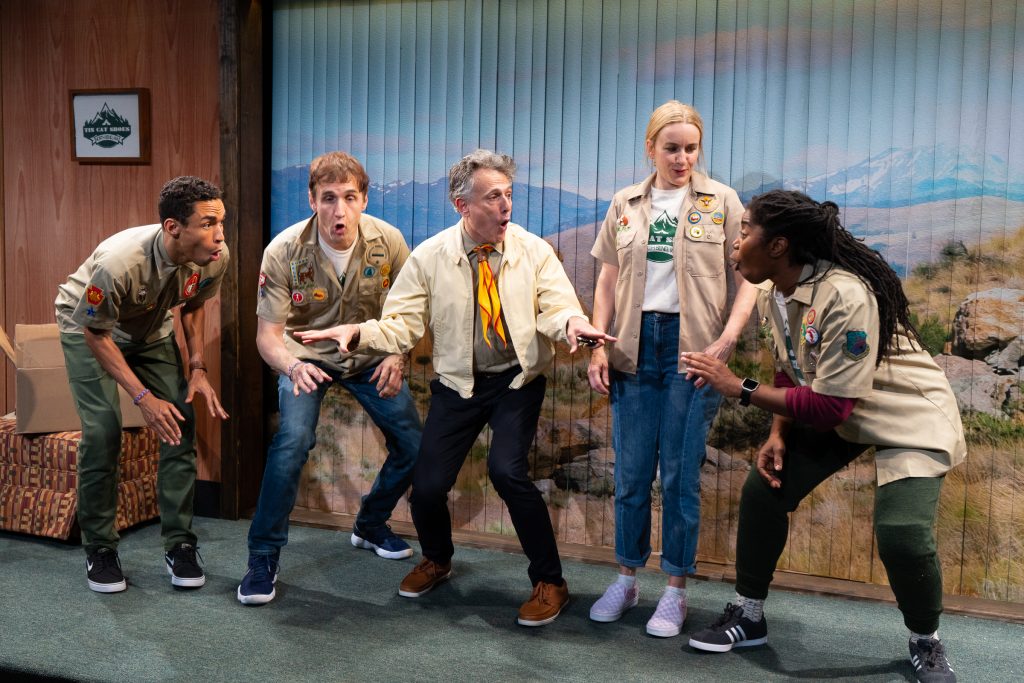
Clubbed Thumb has a rich tradition of producing in this genre. Consider Lunch Bunch, Tin Cat Shoes, Work Hard Have Fun Make History, Jimmy Carter Was a Democrat, and Men on Boats. Consider also outside our history: The Antipodes, Paris, The Receptionist, 21st Century Princess (contact us if you’d like to read this), and Gloria.
We encourage inspiration in Mead herself: a refreshing bluntness, an embrace of idiosyncrasy, and not taking anything as a given. We invite you to spend time with Margaret Mead’s pop culture offerings, like her Redbook column, her conversations with notables such as James Baldwin, even her late night interview with Dick Cavett. This is just the tip of the iceberg – there are many speeches, interviews, videos, and books (over 250!) that she created in her lifetime.
In your play, please adhere to the following guidelines:
- The time and location must for one scene shift outside of the workplace.
- There should be no central protagonist and no fewer than five characters.
- Most if not all of the characters should be women and there should be heterogeneity in all other demographics.
- Include an intergenerational friendship.
- We encourage playwrights to excavate beyond the familiar tropes of cultish, domineering bosses, mind-numbing cubicles, plucky interns. Your workplace cannot be a coffee shop or a theater, and if it is an office, it should be a quite specific one.
- You can have three stage directions.
- You can have three props and one of them must be one of the following Margaret Mead-ian standbys: a forked stick, a jettisoned handkerchief, an abundance of letters, a majestic embroidered cape, a tower of dirty dishes.
You must include or riff off of at least one of these Mead-isms attributed to her:
“Post-menopausal zest” – a term coined by Mead, possibly in the 1950s, that became popularized in 1992.
“A healed femur” – Mead held up a bone in a lecture hall, arguing it signified an advance of civilization, because to heal from such a break would require extended care.
“Never break a date with a woman for a date with a man” – Mead family lore.
“Extreme heterosexuality is a perversion” – possibly extrapolated from Mead’s January 1975 Redbook column, “Bisexuality: What’s It All About?”
“Sooner or later I’m going to die, but I’m not going to retire” – unknown, but definitely how she lived.
Finally, and crucially: consider the Clubbed Thumb parameters and aesthetic.


TO APPLY: SUBMIT THE FOLLOWING THROUGH THE FORM BELOW
(this is a ANONYMOUS submission, see notes below)
1) A one-page letter of intent describing your proposed project;
2) 10 exploratory pages from the proposed project (either contiguous or from different sections of the proposed play);
3) One of your finished plays, for reference;
4) Your resume
IMPORTANT NOTES
No names please — on the letter, the 10 page sample or the finished play for reference, or in any file names. The panel reads all submissions anonymously — the only place your name should appear is on the info form and on your resume.
The letter of intent should briefly map out the proposed piece and, if need be, orient the reader to the excerpt’s relationship to the whole. You needn’t explain or repeat anything that your 10 page sample makes clear. Then give us an idea of where the piece is coming from and where you think you want to go with it.
We ask you to include one of your finished plays for reference. Note (where prompted in the form) any relationship or similarities the complete play has to the proposed project, and recommend 10 pages for us to start with.
One last thing: this is a commission
A FEW FAQS:
Do I have to include all of the prompts in my 10-page sample? You don’t have to include all of the prompts in your sample— but we do want the piece to be in response to the prompt, so it is useful to get some evidence of that in your sample. If you have ideas for how to incorporate the prompts into the rest of the play, it could be helpful— but not mandatory— to include that in the letter of intent.
What does the three props/stage directions limit mean? Specifically, props are things you can lift, and stage directions refer to anything that isn’t dialogue, including information about setting at the beginning of the play. More broadly, though, we are asking for a play with virtually no stage directions or props to encourage you to put all the information you need into the dialogue, and to create a play that could be staged in different ways and on different budget levels, that relies more on performance than on things.
Can I submit 10 pages from a play that I’ve already written? No; submissions should be written specifically in response to the prompt.
If I write an entire play, can I submit the complete draft as my complete play? Also no; we’d like to see a different example of your work.
DEADLINE: MONDAY, FEBRUARY 15th (Presidents’ Day) at 11:59PM EST
The proposals will be read and adjudicated over the course of the winter/spring, and the commission(s) awarded shortly thereafter. The $15,000 commission — which might be split between writers if the panel so elects — will be paid out in installments, with the first installment following the signing of a contract. Send questions to info[at]clubbedthumb[dot]org
Many thanks to Bailey Williams for help devising this prompt. CLICK HERE to read commission prompts from past years.